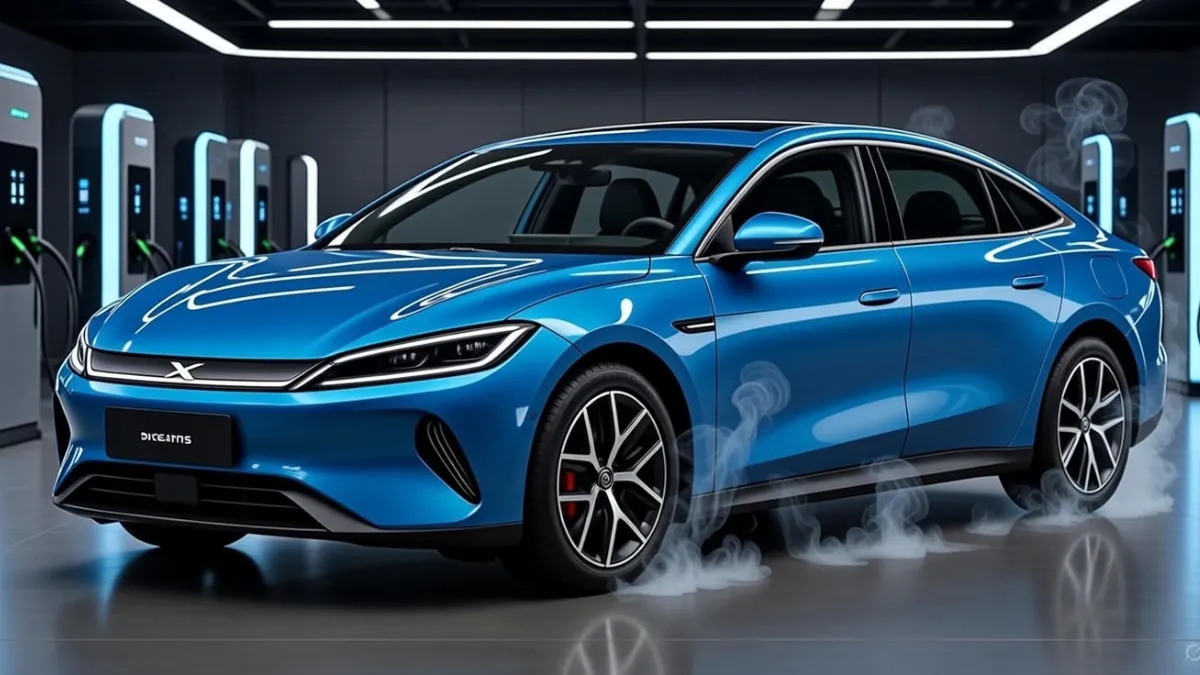
BYD’s flash charging EV technology has created global buzz by claiming up to 400 km of driving range added in just 5 minutes. Powered by megawatt-level charging capability, this breakthrough marks a major leap in electric vehicle usability and convenience. Developed by BYD, the technology aims to reduce one of the biggest barriers to EV adoption by bringing charging times closer to traditional refuelling.
What Is BYD Flash Charging Technology
BYD’s flash charging system is built around extremely high charging power delivered safely and efficiently to the battery. Unlike conventional fast chargers that operate in the 150–350 kW range, this system moves into megawatt territory, dramatically increasing how much energy can be transferred in a very short time. The goal is to make EV charging feel almost as quick and convenient as filling a fuel tank.

How Megawatt Charging Enables 400 Km in 5 Minutes
Megawatt charging works by combining ultra-high voltage with very high current while maintaining thermal stability. BYD’s battery chemistry, internal architecture, and cooling systems are designed to accept this intense power flow without overheating or degrading battery life. In practical terms, this allows a massive amount of energy to enter the battery in minutes, translating into hundreds of kilometres of usable driving range almost instantly.
| BYD Flash Charging Technology Overview | Details |
|---|---|
| Claimed Range Added | Up to 400 km |
| Charging Time | Around 5 minutes |
| Charging Power | Megawatt-level (1,000 kW class) |
| Core Focus | Ultra-fast DC charging |
| Technology Type | Advanced battery and charging system |
| Impact Area | Next-generation EV infrastructure |
Battery Technology Behind the Breakthrough
The success of flash charging depends heavily on battery design. BYD is believed to be using advanced cell materials, improved energy density, and enhanced thermal management to support such rapid charging. These batteries are engineered to minimize resistance and heat buildup, which are the main limitations in ultra-fast charging systems.

Infrastructure Challenges and Requirements
While the technology is impressive, megawatt charging requires equally advanced infrastructure. Charging stations must support extremely high power delivery, robust cooling, and grid-level upgrades. This means widespread adoption will initially be limited to select locations, such as highways, fleet hubs, and next-generation charging corridors.
What This Means for the Future of EVs
If deployed at scale, BYD’s flash charging technology could fundamentally change how people view electric vehicles. Long charging stops could become a thing of the past, making EVs far more practical for long-distance travel and commercial use. It also puts pressure on other automakers and charging networks to accelerate innovation in battery and infrastructure technology.

Conclusion: BYD’s flash charging technology shows how megawatt-level power can deliver up to 400 km of range in just 5 minutes, bringing EV charging closer than ever to the speed and convenience of conventional refuelling.
Disclaimer: This article is based on company claims, early demonstrations, and available technical information. Real-world charging speed, range gained, and availability may vary depending on vehicle model, battery condition, and charging infrastructure.