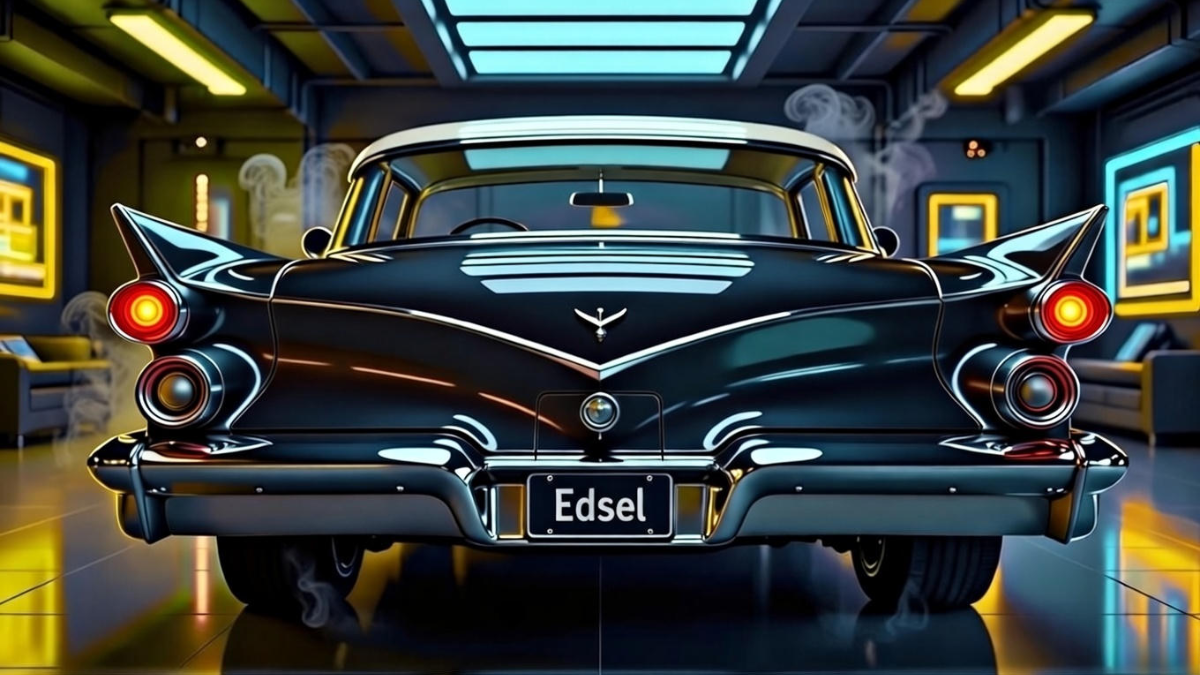
The 1958 Edsel Corsair stands as one of the most talked-about cars in American automotive history, not because of success, but because of how dramatically it missed expectations. Launched with enormous hype and positioned as a bold new nameplate, the Corsair promised innovation, luxury, and performance. Instead, it became a cautionary tale of overconfidence, misjudged design, and poor market timing under the ambitious expansion plans of Ford Motor Company.
Ambitious Design That Divided Opinion
The Corsair’s design was meant to be futuristic and instantly recognizable, but it quickly became its most controversial feature. The tall, vertical grille was unlike anything on the road at the time and immediately polarized buyers. While some appreciated its boldness, many found it awkward and unattractive. Combined with heavy proportions and excessive trim, the styling failed to resonate with a public that was already shifting toward cleaner, simpler designs.
Big Promises and High Expectations
Edsel was introduced with one of the largest marketing campaigns the auto industry had ever seen. Ford positioned the Corsair as a premium offering that bridged the gap between mainstream and luxury cars. Buyers were promised advanced features, superior engineering, and prestige. Unfortunately, these promises raised expectations far beyond what the final product could realistically deliver.
| 1958 Edsel Corsair Overview | Details |
|---|---|
| Body Style | Full-size sedan and hardtop |
| Market Position | Upper-mid price segment |
| Design Highlight | Vertical horse-collar grille |
| Engine Options | Large displacement V8s |
| Brand | Edsel Division |
| Legacy | One of the biggest automotive failures |
Engineering Issues and Quality Problems
Early production problems severely damaged the Corsair’s reputation. Build quality issues, inconsistent assembly, and unreliable components led to customer dissatisfaction almost immediately. Some innovative features were poorly executed, confusing buyers rather than impressing them. At a time when reliability and trust mattered deeply, these issues proved disastrous.

Poor Timing and Market Misreading
The Corsair entered the market during an economic downturn, when buyers were becoming more cautious with spending. Its pricing placed it in a difficult position, competing with both established luxury brands and better-known Ford and Mercury models. Consumers struggled to understand where Edsel fit, and many simply chose safer, familiar alternatives.
From Failure to Fascinating Collectible
Despite its commercial collapse, the 1958 Edsel Corsair has found a second life among collectors and historians. Its rarity, distinctive design, and place in automotive lore have made it a conversation piece at car shows. What was once a sales disaster is now valued as a symbol of risk, ambition, and the lessons learned from getting it wrong.

Conclusion: The 1958 Edsel Corsair remains a powerful reminder that bold ideas and massive budgets do not guarantee success. Its failure reshaped how automakers approach branding, design, and market research.
Disclaimer: This article is for general informational purposes only and is based on historical records and automotive analysis. Specifications, interpretations, and market context may vary across sources and should be viewed as part of broader automotive history.